
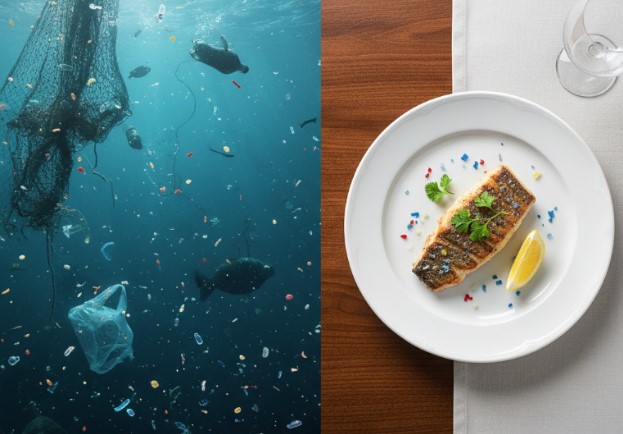
In recent years, scientists and environmental experts have raised growing concerns about the widespread presence of microplastics in food. These tiny plastic particles—often smaller than 5 millimeters—are now found in seafood, salt, bottled water, and even fruits and vegetables. They originate from degraded plastic waste that enters the ocean, breaks down into microscopic fragments, and reenters the food chain through marine life. The alarming reality is that ocean pollution has now made its way onto our dinner plates. At ZeroToxins, our mission is to educate and empower individuals to make cleaner, safer choices to reduce exposure to microplastics in food and other everyday contaminants that threaten long-term health.
How Microplastics Enter The Food Chain?
The journey of microplastics begins with improper plastic disposal and ocean waste accumulation. When plastic materials such as packaging, bottles, and fishing nets end up in the ocean, sunlight and wave action break them into smaller fragments. These particles are then ingested by plankton, small fish, and shellfish—forming the base of the aquatic food chain. As larger species consume smaller ones, microplastics in food accumulate and biomagnify, meaning that the concentration of plastic particles increases at higher levels of the food chain. By the time seafood reaches human consumption, these contaminants are already embedded in edible tissues.
Health Risks Associated With Microplastic Consumption
While research into the full impact of microplastics in food is ongoing, early studies indicate several potential health risks. Microplastics may contain or absorb harmful chemicals such as bisphenol A (BPA), phthalates, and heavy metals. Once ingested, they can cause inflammation, oxidative stress, and disruptions in hormonal balance. Some studies suggest that microplastics may also interfere with gut microbiota, compromising digestion and immunity. At ZeroToxins, we emphasize that understanding the risks associated with microplastics in food is the first step toward creating effective strategies for prevention and detoxification.
The Role Of Ocean Pollution In Plastic Contamination
Ocean pollution is the main source of the microplastics in the food crisis. Every year, millions of tons of plastic waste flow into the seas, primarily from coastal regions, rivers, and industrial runoff. Plastic debris doesn’t disappear—it breaks down into progressively smaller particles that persist for centuries. Even when filtered or collected, these fragments continue to circulate in marine ecosystems. They cling to algae, float through plankton layers, and settle into ocean sediments, affecting both aquatic species and human food resources. Addressing ocean pollution requires global cooperation in reducing plastic production, improving waste management, and developing sustainable materials.
Common Foods Containing Microplastics
- Seafood: Fish and shellfish directly absorb microplastics through ingestion and gill filtration.
- Sea salt: Ocean-derived salts frequently contain microplastic fragments.
- Bottled water: Microplastic particles often leach from bottle caps and containers.
- Fruits and vegetables: Agricultural use of plastic mulch and contaminated water can introduce microplastics into plant tissues.
- Honey and beer: These everyday consumables may also show traces of plastic particles from environmental exposure.
Detoxifying The Body From Plastic Exposure
Even with the best preventive measures, it’s nearly impossible to avoid all microplastics in food. Therefore, supporting the body’s natural detox pathways becomes crucial. Consuming high-fiber diets, staying hydrated, and incorporating antioxidant-rich foods like leafy greens and berries can help reduce toxin buildup. The broader challenge of microplastic contamination is part of a much larger conversation about Environmental toxins. These include pesticides, heavy metals, industrial pollutants, and synthetic chemicals that infiltrate our food, water, and air. By addressing Environmental Toxins holistically, we can reduce cumulative toxic load and safeguard both planetary and human health.
Conclusion
The growing presence of microplastics in food is a stark reminder of how interconnected human health and environmental stewardship truly are. From the depths of the ocean to the food on our plates, plastic pollution affects every layer of the ecosystem. By making conscious consumer choices, supporting sustainable initiatives, and embracing detox strategies from trusted wellness brands like ZeroToxins, individuals can play a key role in reducing plastic impact. The path forward lies in innovation, education, and accountability—ensuring a cleaner, toxin-free future for generations to come.