
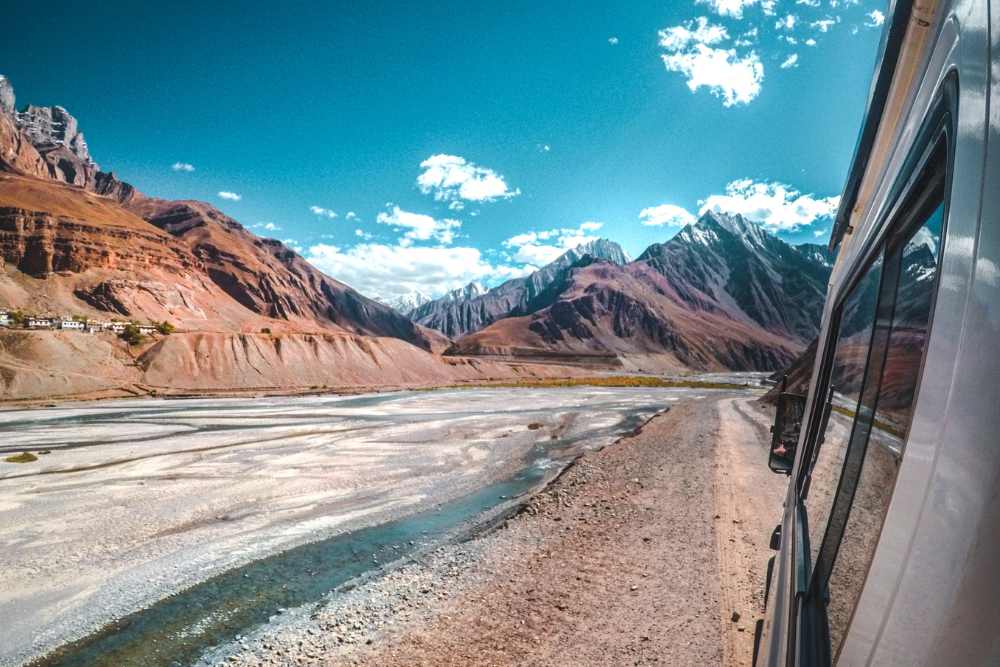
The dream of the Himalayas usually starts with a photo of a Royal Enfield parked against a backdrop of snow-capped peaks, or a luxury glamping tent under the Milky Way. But for students, backpackers, and solo travelers, the reality of checking bank accounts often puts the brakes on these dreams. A typical taxi-based trip to Ladakh or Spiti can easily cost upwards of ₹40,000 per person.
But what if I told you that the “Middle Land”—the raw, silent, and majestic Spiti Valley—is actually one of the most affordable destinations in India, provided you are willing to trade a little luxury for a lot of adventure?
Spiti is not just a destination; it is a test of endurance. It is a cold desert mountain valley located high in the Himalayas of Himachal Pradesh, sandwiched between India and Tibet. While luxury travelers fly over the bumps in Innovas, the budget traveler experiences the road in its rawest form.
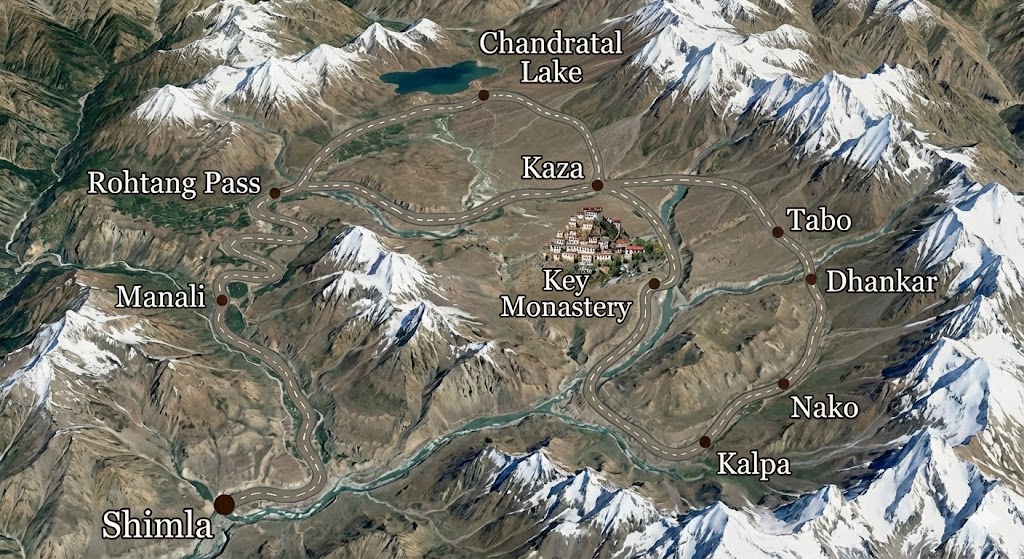
In this guide, we are going to break down exactly how to execute a 10-day Spiti Valley circuit (Shimla to Manali) for under ₹18,000. No expensive taxis, no luxury hotels—just you, the mountains, and the legendary HRTC buses.
Phase 1: Transport – The HRTC Lifeline
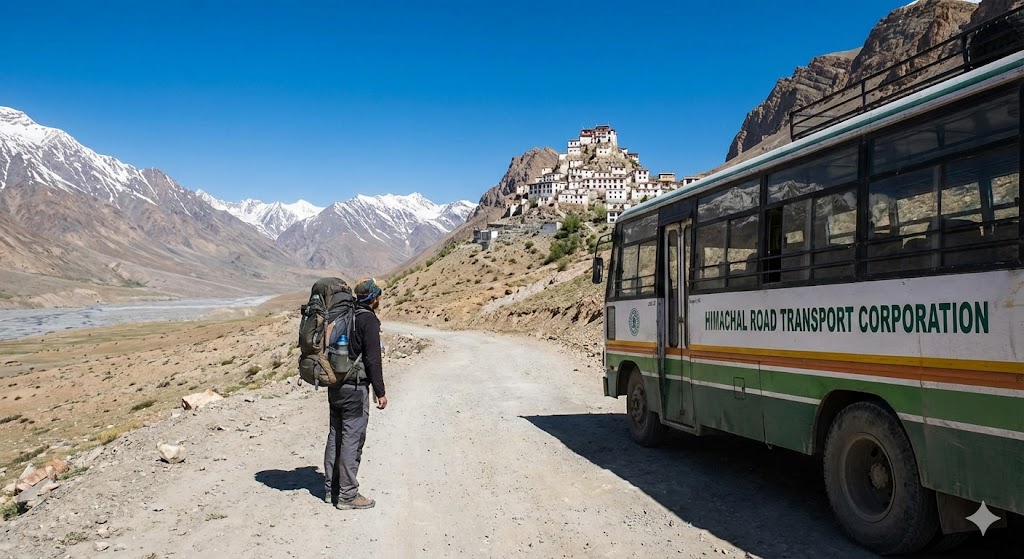
Transport is the biggest expense in the Himalayas. A private taxi from Shimla to Kaza can cost ₹15,000 one way. To stay on budget, you must befriend the HRTC (Himachal Road Transport Corporation).
The HRTC drivers are the unsung heroes of the mountains. They navigate roads that would make Formula 1 drivers sweat, and they do it for pennies.
The Route Strategy
We will follow the Shimla -> Kinnaur -> Spiti -> Manali route. This is vital for acclimatization and budget. The buses on this route are frequent and reliable up to Reckong Peo.
The Legendary “Kaza Looper”
There is one specific bus you need to know about. It is the lifeline of the valley.
- Route: Reckong Peo to Kaza
- Departure: 7:00 AM sharp from Peo Bus Stand.
- Cost: Approx ₹500.
- The Experience: This is an 8-10 hour journey. It is not comfortable. It is dusty, bumpy, and crowded. But, if you snag a window seat (aim for the left side), you will witness the landscape transform from the lush green pine forests of Kinnaur to the barren, brown lunarscape of Spiti. It is the best ₹500 sightseeing tour in the world.
Pro Tip: Do not book tickets online. HRTC local bus tickets are bought at the counter or directly from the conductor. Arrive at the bus stand 45 minutes early to claim a seat.
Hitchhiking: The Spiti Way
In Spiti, hitchhiking is not just about saving money; it is a culture. Locals, truck drivers, and fellow tourists often stop to pick up walkers. It is generally safe and widely accepted. If you miss a bus between villages (like Kaza to Key), put your thumb out. Just remember to offer a small contribution or at least a genuine smile and conversation.
Phase 2: Accommodation – The “Monastery Hack”
Most travel blogs will tell you to book homestays. While homestays are great, they have become pricier (averaging ₹1,200–₹1,500/night with food).
To stay under the ₹18,000 limit, we use the Monastery Guest House Hack.
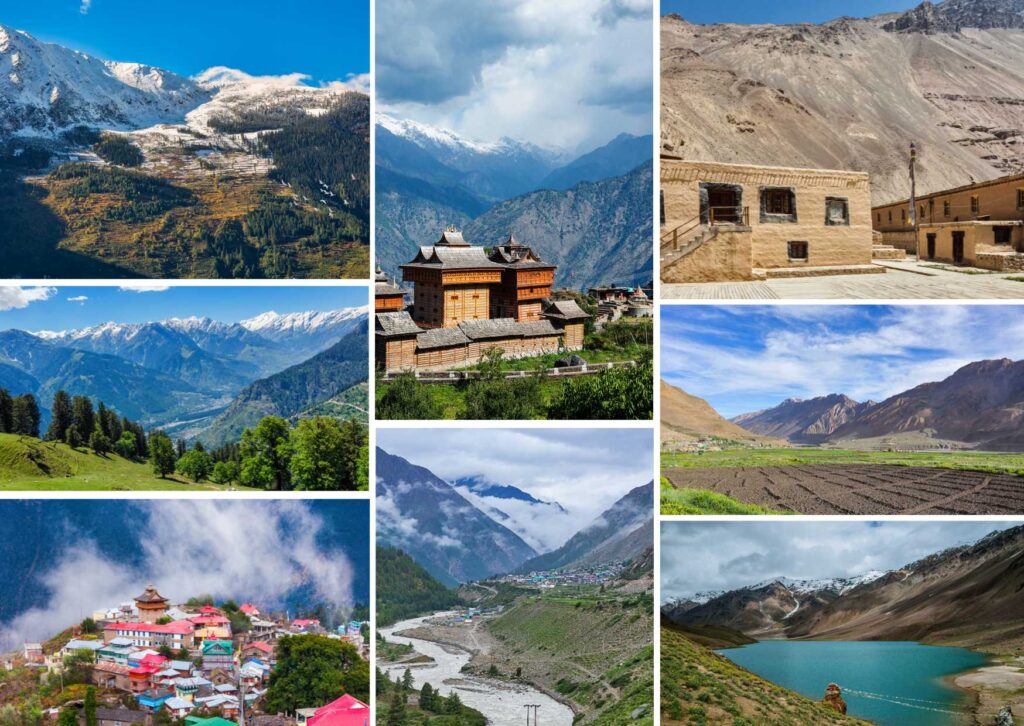
Many of the ancient monasteries in Spiti offer accommodation for travelers. These are not hotels. They are simple rooms maintained by the monks to generate revenue for the monastery upkeep. They are clean, safe, and incredibly cheap.
1. Tabo Monastery Guest House
Tabo is known as the “Ajanta of the Himalayas.” The monastery here runs a guest house right next to the 1,000-year-old mud complex.
- Cost: ₹300–₹600 per night.
- Experience: You wake up to the sound of monks chanting. The rooms are basic (mud walls keep them warm), and the toilets are usually shared but clean. It is a spiritual experience that money can’t buy.
2. Key Monastery
The iconic Key Monastery, perched on a conical hill, also offers rooms for men (and sometimes women, depending on availability/rules which change annually).
- Cost: Donation-based or nominal fee (approx ₹250/night).
- Experience: Staying here allows you to witness the morning prayer sessions and drink butter tea with the lamas. The food served is simple Dal-Rice, often included in the donation.
3. Dhankar Monastery
Perched on a cliff, the New Monastery at Dhankar offers guest rooms.
- Cost: ₹500 approx.
- Experience: The view from the balcony looks straight down into the confluence of the Spiti and Pin rivers. It is better than any 5-star hotel view in Manali.
The Backup Plan: If monasteries are full, look for Zostel Spiti (Kaza) or similar backpacker hostels where dorm beds go for ₹600–₹800.
Phase 3: Food & Water Strategy
In Spiti, the “Pizza Index” destroys budgets. If you eat in the tourist cafes of Kaza offering Shakshuka, Pizza, and Nutella Pancakes, you will spend ₹800 per meal.
Eat Like a Local
- The Dhaba Rule: Eat where the taxi drivers eat. Local dhabas serve Thukpa (noodle soup), Momos, and Dal Chawal.
- Cost: A plate of massive, steaming momos costs ₹100. A full plate of Rajma Chawal costs ₹120. These meals are calorie-dense, perfect for the cold weather, and easy on the wallet.
The Water Tax
Bottled water in Spiti costs ₹40–₹50 because of transport costs. If you buy 3 bottles a day, that’s ₹1,500 over 10 days—almost 10% of your budget!
- The Solution: Carry a sturdy, reusable metal water bottle. Most guest houses and cafes in Kaza have a filtered water dispenser where you can refill for ₹10 or for free. Alternatively, carry chlorine tablets. You save money and save the valley from plastic waste.
Phase 4: The 10-Day Budget Itinerary
Here is the day-by-day breakdown to keep you on track.
Day 0: Delhi to Shimla
Take the overnight HRTC “Ordinary” bus from ISBT Kashmiri Gate.
- Cost: ₹500.
Day 1: Shimla to Reckong Peo
Take the early morning bus from Shimla ISBT to Reckong Peo. It’s a long 9-hour journey.
- Stay: Dormitory at PWD Rest House or a cheap lodge near the bus stand.
- Cost: Bus ₹450 + Stay ₹500 + Food ₹300 = ₹1,250
Day 2: Reckong Peo to Tabo (Entering Spiti)
Take the 7:00 AM Kaza bus, but get down at Tabo. Do not go all the way to Kaza yet.
- Stay: Tabo Monastery Guest House.
- Cost: Bus ₹350 + Stay ₹400 + Food ₹300 = ₹1,050
Day 3: Tabo to Dhankar
Explore Tabo in the morning. Then, catch a bus or hitchhike to Sichling village. From Sichling, a road goes up to Dhankar (8km). You can trek it (2 hours) or hitch a ride.
- Stay: Dhankar Monastery Guest House.
- Cost: Transport ₹100 + Stay ₹500 + Food ₹300 = ₹900
Day 4: Dhankar to Kaza
Hike down to Sichling and catch the morning bus coming from Peo, or hitchhike to Kaza.
- Stay: Zostel Dorm or Homestay in Kaza.
- Cost: Transport ₹100 + Stay ₹700 + Food ₹400 = ₹1,200
Day 5: Kaza Sightseeing (Langza, Hikkim, Komic)
This is the only day we splurge. You cannot walk this circuit easily in one day. Find 2-3 other solo travelers in Kaza (easy to find in cafes) and split a taxi, or rent a scooty/bike.
- Cost: Shared Taxi/Bike Rent share ₹800 + Stay ₹700 + Food ₹400 = ₹1,900
Day 6: Key Monastery & Kibber
Take the local 5:00 PM bus from Kaza to Key Monastery.
- Stay: Key Monastery Guest House.
- Cost: Bus ₹50 + Stay ₹300 + Food ₹300 = ₹650
Day 7: Key to Kaza (Rest Day)
Walk down from Key or take the morning bus back to Kaza. Explore the riverside, visit the market, and rest.
- Stay: Dorm in Kaza.
- Cost: Stay ₹700 + Food ₹500 = ₹1,200
Day 8: Kaza to Chandratal (The Big Splurge)
There is no direct bus to the lake. You must take the early morning bus towards Manali (Kaza-Manali bus), get down at Batal, and trek 14km to the lake (tough) or hitchhike.
- Note: Camping at Chandratal is expensive (₹2000+).
- Budget Hack: Do not stay at Chandratal. Visit the lake from Batal, come back, and stay at the “Chacha Chachi Chandra Dhaba” at Batal. They offer beds in a stone igloo/dorm for very cheap.
- Cost: Bus ₹250 + Stay (Batal) ₹300 + Food ₹300 = ₹850
Day 9: Batal to Manali
Catch the morning bus coming from Kaza, or hitch a ride on a truck crossing the Gramphu pass. This is a rough ride.
- Stay: Old Manali Dorm.
- Cost: Transport ₹300 + Stay ₹600 + Food ₹500 = ₹1,400
Day 10: Manali to Delhi
Relax in Old Manali. Take the evening Volvo (or ordinary bus to save more) back to Delhi.
- Cost: Bus ₹1,000 + Food ₹500 = ₹1,500
The Final Receipt: Did we make it?
Let’s tally the expenses for this 10-day adventure.
| Category | Item Description | Cost (₹) |
| Transport | Delhi-Shimla, HRTC Buses in Spiti, Manali-Delhi | ₹4,000 |
| Local Transport | Shared Taxi/Bike day (Day 5) + Hitchhiking | ₹1,000 |
| Accommodation | 9 Nights (Mix of Monasteries, Dorms, Dhaba) | ₹5,500 |
| Food | 10 Days @ Avg ₹450/day | ₹4,500 |
| Permits/Misc | Entry fees, emergency snacks | ₹1,500 |
| Buffer | For that one expensive coffee or souvenir | ₹1,000 |
| GRAND TOTAL | ₹17,500 |
We did it. ₹17,500.
This leaves you with ₹500 to buy a small prayer flag souvenir to hang in your room back home—a reminder that you conquered one of the world’s toughest roads without breaking the bank.
A Final Word of Warning
Budget travel in Spiti is not for the faint-hearted. You will be dusty. You might get a mild headache from the altitude. The bus might break down. The monastery toilet might be a hole in the ground.
But when you are sitting on the roof of the Kaza bus, wind in your hair, watching the sun hit the peaks of the Kinner Kailash, you will realize that the best views in the world don’t require a platinum credit card. They just require the courage to go.
Spiti Valley Budget Travel FAQs: Everything You Need to Know
The best time for a budget trip to Spiti Valley is from May to October. During these months, roads from Shimla and Manali are open, and HRTC buses run regularly. Traveling in shoulder months like May or September can help you avoid crowds and slightly reduce costs.
Yes, traveling with Himachal Road Transport Corporation (HRTC) buses is generally safe. The drivers are highly experienced in navigating difficult mountain roads. However, be prepared for long, bumpy journeys and always keep essential items like water, snacks, and medicines with you.
Absolutely. Spiti Valley is popular among solo travelers and backpackers. Places like Kaza have hostels and cafes where you can easily meet fellow travelers to share transport costs and experiences.
Indian citizens do not require permits for most parts of Spiti Valley. However, if you plan to visit areas near the Indo-Tibetan border like Komic or Hikkim, you may need to carry valid ID proof. Foreign nationals require an Inner Line Permit (ILP).
Spiti Valley is located at high altitude (over 3,500 meters), so altitude sickness can be a concern. Following the Shimla route helps with gradual acclimatization. Stay hydrated, avoid alcohol initially, and ascend slowly—especially before reaching places like Key Monastery.