
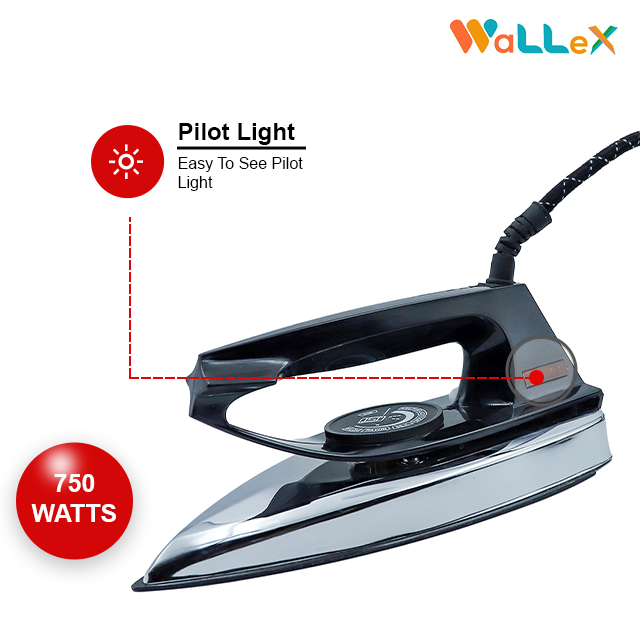
In an era where technology continues to simplify daily chores, one household appliance has stood the test of time and continues to be an indispensable part of every home—the clothes iron. While modern innovations such as steam irons, garment steamers, and wrinkle-release sprays are gaining popularity, the traditional dry iron maintains its stronghold because of its simplicity, reliability, and effectiveness.
This article explores the importance of dry irons, their role in maintaining clothing, their benefits over other ironing methods, and why they remain a staple in households across the world.
Understanding the Dry Iron
A dry iron is the most basic form of iron, consisting of a flat soleplate that heats up when powered. Unlike steam irons, it does not have a water tank or steam holes. It simply applies heat and pressure directly to fabric to remove wrinkles and creases.
Its simple design and ease of use make it especially popular in regions where low-maintenance, durable household appliances are preferred. The absence of complicated features ensures that anyone—from a student ironing their uniform to a working professional preparing office attire—can use it with minimal effort.
Why Ironing Clothes Matters
Before diving into the importance of dry irons, it’s worth emphasizing why ironing clothes is essential:
-
Professionalism: Wrinkle-free clothes project a clean, confident, and polished image.
-
Longevity of Fabrics: Ironing smooths fibers and prevents deep creases that weaken fabric over time.
-
Hygiene: Heat from irons kills bacteria and mites, ensuring garments remain fresh.
-
Self-Confidence: Wearing crisp, freshly ironed clothes enhances personal confidence.
A dry iron fulfills all of these roles without the need for complicated add-ons.
The Importance of Clothes Dry Iron
1. Simplicity and Reliability
Dry irons are built with a straightforward mechanism. With no water tanks, steam vents, or complicated buttons, the chances of malfunction are minimal. This simplicity makes them a dependable option for long-term use.
2. Precision in Ironing
The absence of steam allows the dry iron to apply even, consistent heat across the fabric. This makes it particularly effective for creating sharp creases in trousers, skirts, and uniforms where precision is essential.
3. Safe for Delicate Fabrics
Certain fabrics—such as silk, wool, and polyester—can get damaged when exposed to moisture or steam. A dry iron, used with the correct heat setting, is safer for these materials, ensuring they remain intact while still wrinkle-free.
4. Affordability
Compared to steam irons and advanced garment steamers, dry irons are significantly more affordable. They provide excellent results without requiring a large investment, making them accessible to households of all income levels.
5. Low Maintenance
Since there is no water tank or steam system, dry irons are easy to clean and maintain. Issues like scaling, leaks, or mineral buildup—common with steam irons—are not a concern here.
6. Durability
Because of their simple design and fewer moving parts, dry irons tend to last much longer than steam irons. Many families pass down dry irons that remain functional for decades.
7. Energy Efficiency
Dry irons generally consume less electricity than steam irons, making them cost-effective for households where electricity savings are important.
8. Portability and Convenience
Their compact design and lighter weight make dry irons easy to carry. This is particularly useful for students, working professionals, and travelers who need a reliable solution for quick ironing.
9. No Water Dependency
Steam irons require clean or distilled water to prevent scaling and ensure smooth functioning. In contrast, dry irons do not need water at all, making them hassle-free for regions where water hardness is an issue.
10. Universal Usability
From everyday cotton shirts to delicate synthetic fabrics, a dry iron can handle almost any material when used with proper temperature control.
Dry Iron vs. Steam Iron
To better understand the importance of dry irons, it helps to compare them with their steam counterparts.
| Feature | Dry Iron | Steam Iron |
|---|---|---|
| Design | Simple, no water tank | Has water tank and steam vents |
| Maintenance | Low, easy to clean | Requires regular descaling |
| Fabric Safety | Safer for delicate fabrics | Risk of water stains or burns |
| Cost | More affordable | More expensive |
| Durability | Longer lifespan | Prone to leaks and scaling |
| Performance | Great for light to medium wrinkles | Better for stubborn wrinkles |
While steam irons are great for tough creases, dry irons stand out for their durability, affordability, and overall convenience.
Role of Dry Irons in Different Settings
1. Households
For families, the dry iron is a must-have appliance. It is used daily for school uniforms, office wear, and casual clothes. Its ease of use makes it suitable for all members of the household.
2. Students and Professionals
In hostels or rented apartments, dry irons are favored for their portability and low cost. They help students and young professionals maintain a neat appearance without depending on expensive laundry services.
3. Tailors and Small Businesses
Dry irons are commonly used in tailoring shops and small clothing businesses. Their consistent heat helps in pressing seams and giving garments a professional finish.
4. Rural and Low-Income Communities
In many regions, dry irons are the preferred choice due to affordability and minimal maintenance. They are also available in non-electric “charcoal iron” versions for areas without reliable electricity.
5. Travelers
Compact dry irons are often carried by frequent travelers. They take up less space in luggage and provide quick solutions for ironing clothes during trips.
Best Practices for Using Dry Irons
To get the most out of your dry iron, here are some important practices to follow:
-
Check the Care Label – Always read garment care labels to know the correct temperature setting.
-
Adjust Temperature Appropriately – Cotton and linen require high heat, while polyester and silk need low heat.
-
Use a Pressing Cloth – Place a cotton cloth between the iron and delicate fabrics to prevent scorching.
-
Iron Inside Out – This avoids shine marks on dark-colored clothes.
-
Clean the Soleplate Regularly – Wipe with a damp cloth after unplugging to remove residue.
-
Avoid Overheating – Do not leave the iron face-down on clothes; it can burn the fabric.
Modern Innovations in Dry Irons
While traditional in design, dry irons have not remained completely unchanged. Modern versions now feature:
-
Non-stick Soleplates – For smoother gliding.
-
Temperature Control Knobs – To suit different fabrics.
-
Ergonomic Handles – For comfortable grip during longer ironing sessions.
-
Automatic Shut-off – For safety if left unattended.
-
Lightweight Designs – For portability and ease of use.
These upgrades make dry irons even more practical and user-friendly while preserving their fundamental simplicity.
Environmental and Economic Importance
Dry irons are also important from both economic and environmental perspectives:
-
Energy Savings: Lower electricity consumption reduces bills and environmental impact.
-
Reduced Waste: Long-lasting durability means fewer replacements and less electronic waste.
-
Affordable Access: Dry irons allow low-income families to maintain professional-looking clothes without heavy costs.
The Psychological Impact of Well-Ironed Clothes
Beyond practical benefits, there is also a psychological aspect to ironing clothes with a dry iron. Wearing neatly pressed clothing contributes to a sense of discipline and confidence. For students, it instills responsibility and routine. For professionals, it boosts self-esteem and enhances first impressions. The dry iron, therefore, plays a subtle but powerful role in personal development.
Conclusion
The clothes dry iron may appear simple in design, but its importance cannot be overstated. It offers a perfect balance of affordability, reliability, and effectiveness that continues to make it an essential household appliance. Unlike more advanced devices that require frequent maintenance and higher costs, the dry iron remains accessible to everyone while fulfilling the timeless need for neat, wrinkle-free clothing.
In a world that is increasingly embracing technology and convenience, the dry iron reminds us that sometimes simplicity is the most effective solution. Whether for households, students, professionals, or small businesses, the dry iron continues to prove its value as a timeless, essential tool for everyday life.