
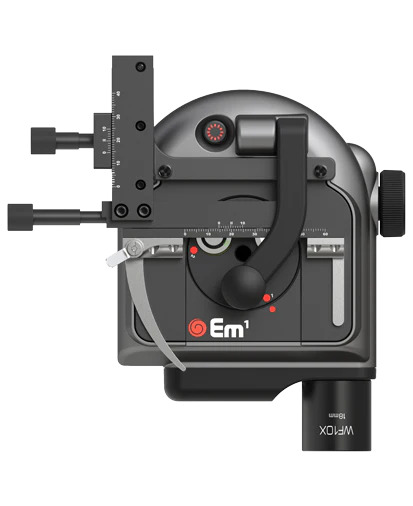
Microscopes have evolved significantly over time, and one of the most innovative advancements is the digital microscope. Unlike traditional optical microscopes that rely on eyepieces, digital microscopes use cameras and computer software to display images on a monitor or screen. This makes them an excellent tool for education, research, industrial inspection, and personal exploration.
What is a Digital Microscope?
A digital microscope is an imaging device that combines optics with digital technology. Instead of viewing the specimen directly through lenses, the microscope captures the image with a camera sensor and displays it on a screen. This not only improves visibility but also allows images and videos to be stored, shared, and analyzed easily.
Key Features of Digital Microscopes
-
High-Resolution Imaging: Many models offer HD or even 4K resolution for crystal-clear detail.
-
Magnification: Ranges from 20x to over 1000x depending on the model and application.
-
Image and Video Capture: Users can capture still images or record live videos of specimens.
-
Software Integration: Enables measurement, annotation, and comparison of samples.
-
Ease of Sharing: Results can be quickly shared digitally for collaboration or presentations.
Benefits of Using Digital Microscopes
-
User-Friendly: No eyepiece strain—view specimens on a large screen comfortably.
-
Educational Value: Perfect for classrooms, as multiple students can view a sample at once.
-
Documentation: Easy storage of high-quality images and videos for research or reports.
-
Remote Learning & Research: Ideal for online teaching and virtual collaboration.
-
Versatility: Suitable for biology labs, electronics inspection, quality control, and more.
Applications of Digital Microscopes
Digital microscopes are used in a wide range of fields:
-
Education: Teachers can demonstrate microscopic details to an entire classroom.
-
Biological Research: Useful for studying cells, tissues, and microorganisms.
-
Electronics & Engineering: Helps in inspecting circuit boards, microchips, and tiny components.
-
Forensics: Assists investigators in analyzing trace evidence with precision.
-
Quality Control: Used in manufacturing industries to ensure product accuracy.
Why Choose a Digital Microscope?
Unlike conventional microscopes, digital microscopes enhance collaboration, reduce eye fatigue, and allow for advanced data analysis. Whether you are a student learning the basics of microscopy, a researcher conducting complex analysis, or a professional in need of precise inspection tools, a digital microscope provides accuracy, convenience, and innovation.
Conclusion
Digital microscopes represent the perfect blend of technology and science. Their ability to display, capture, and share images makes them a vital instrument in modern education, research, and industry. As microscopy continues to evolve, digital models are quickly becoming the preferred choice for those who value precision, efficiency, and collaboration.